Digital Privacy: From Cookie Banners to Chinese Cars
From cookie banners to connected cars, Canadians don’t need to panic, but we do need to pay attention, because in the digital economy, data isn’t just collected. It’s currency.
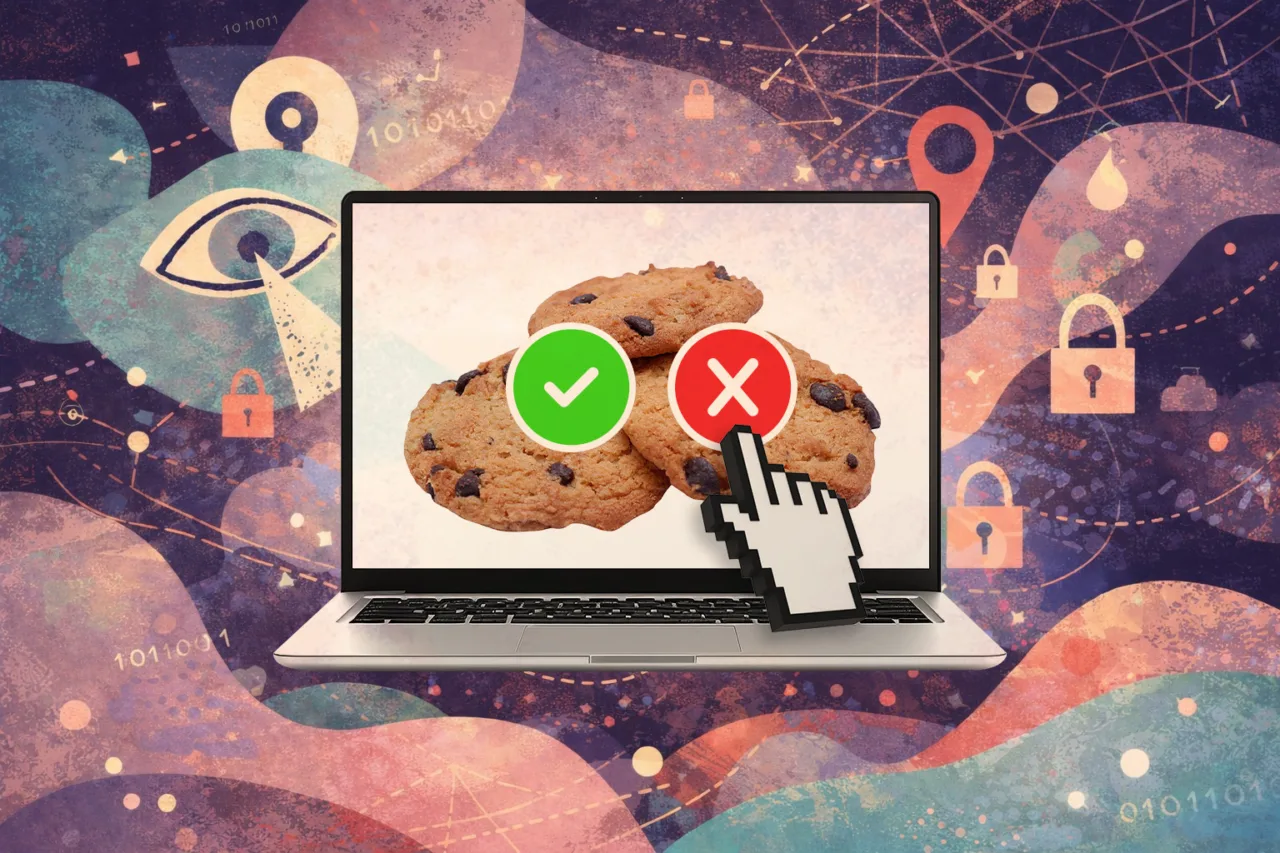
Privacy used to mean closing the curtains. Today it means clicking ‘Reject All’, adjusting app permissions, and wondering whether your car knows more about you than your spouse does.
For Canadians, the conversation around data privacy has become both louder and more confusing. We’re told to be vigilant, but also to enjoy the convenience of smart homes, connected vehicles, personalized ads, AI tools, and frictionless banking.
So which is it? Are we surrendering something essential? Or are we simply participating in a modern social contract?
The truth sits somewhere in between.
The Trade-Off: Convenience, Personalization, and Control
Every piece of connected technology offers a value exchange.
- Personalized search results save time.
- Smart thermostats reduce energy bills.
- Navigation systems prevent traffic headaches.
- Social media keeps us connected.
- Vehicles alert emergency services automatically after collisions.
None of that happens without data.
The philosophical tension is this: privacy is about control, not secrecy. Most Canadians aren’t trying to hide wrongdoing. They simply want reasonable limits on who collects their information, how long it’s stored, and what it’s used for. But control requires attention, and attention is scarce.
We don’t read 4,000-word privacy policies. We click ‘Accept’. We install apps. We connect devices. Because convenience matters. Time matters. Usability matters.
The question isn’t whether or not data collection will occur—It will. The better question is: What is a reasonable boundary?
Can We Live Off-Grid?
Technically? Yes.
Practically? Not really.
To live entirely ‘off-grid’ in 2026 would mean:
- No smartphone
- No connected vehicle
- No social media
- Minimal online shopping
- No smart home devices
- Limited digital banking
For most Canadians—especially business owners, professionals, families, and students—that’s not realistic. It may not even be desirable.
Digital tools create enormous societal benefits: economic growth, medical innovation, accessibility tools, safety improvements, and productivity gains. Data is not inherently bad. In fact, it fuels many of the systems we rely on daily.
The problem arises when data collection becomes invisible, excessive, or detached from meaningful consent. Privacy isn’t about retreating from society. It’s about participating consciously.
Websites: The Illusion of the Cookie Banner
Under Canada’s Personal Information Protection and Electronic Documents Act (PIPEDA), organizations must obtain meaningful consent before collecting personal information.
But meaningful consent and meaningful understanding are not always the same thing. When you visit a website today:
- Cookies track browsing behaviour.
- Analytics tools monitor clicks and devices.
- Embedded platforms (CRMs, booking systems, chat tools) may send data outside Canada.
The banner feels like control. Often, it’s just a checkpoint.
The Trade-Off
Personalized content, saved preferences, better user experience, in exchange for behavioural tracking. For most users, this is a tolerable exchange. The risk emerges when tracking expands beyond necessity.
Reasonable Steps (without Paranoia)
- Decline non-essential cookies when practical.
- Avoid submitting unnecessary personal details.
- Use private browsing for sensitive searches.
- For businesses: audit your tracking tools annually and remove what you don’t truly need.
You don’t need to reject every cookie. But you should understand that ‘free’ content is often subsidized by data.
Phones: The Device That Knows You Best
Your smartphone may be the most intimate object you own. Whether it’s an iPhone or an Android device, it knows:
- Where you travel
- What you search
- Who you contact
- What you take pictures of
- What you read
- When you sleep
And yet, we accept this because the alternative is inconvenience.
The Trade-Off
Real-time navigation, instant communication, biometric security and health tracking, in exchange for deep behavioural data.
For many Canadians, that’s a reasonable bargain. But reasonable doesn’t mean unlimited.
5 Reasonable Steps
- Review app permissions quarterly.
- Disable always-on location tracking where unnecessary.
- Turn off ad personalization.
- Remove unused apps.
- Enable multi-factor authentication.
Privacy here isn’t about throwing your phone in a lake. It’s about trimming excess.
Social Media: Connection and Profiling
Platforms like Meta Platforms, TikTok, and LinkedIn monetize attention. Your engagement patterns build a behavioural profile. That profile drives targeted advertising.
The Trade-Off
Community, business exposure, and cultural participation in exchange for algorithmic analysis.
For business owners especially, opting out entirely may mean reduced visibility or opportunity. But oversharing is optional.
5 Reasonable Steps
- Limit personal details in bios.
- Lock down profile visibility.
- Disable off-platform tracking where possible.
- Be cautious with quizzes and third-party integrations.
- Periodically download your data archive to see what’s stored.
Social media is not inherently exploitative. It becomes problematic when we forget it is commercial infrastructure.
IoT: The Invisible Listeners
Devices like smart speakers, thermostats, cameras, and wearables from Amazon, Google and others quietly collect environmental data. Often the data improves functionality: better temperature control, security alerts, voice recognition. But these devices also expand the perimeter of surveillance into private spaces.
The Trade-Off
Automation and efficiency, in exchange for ambient data collection.
The philosophical discomfort is understandable. Our homes used to be data-free zones.
5 Reasonable Steps
- Change default passwords.
- Segment IoT devices on a separate Wi-Fi network.
- Disable unnecessary cloud recording.
- Periodically delete stored voice recordings.
- Ask yourself before buying: “Do I need this connected?”
The goal isn’t to eliminate technology. It’s to prevent unnecessary expansion.
Cars: Mobility Meets Data Sovereignty
Modern vehicles are rolling data centres. Companies like Tesla, Ford, GM, Toyota, and emerging manufacturers like BYD, collect telematics data including:
- Location history
- Driving behaviour
- Infotainment usage
- Phone synchronization
- Software diagnostics
When headlines focus on “Chinese cars,” the concern often centers on state access or foreign data storage. That’s a legitimate sovereignty discussion.
But from a privacy standpoint, the larger issue is broader:
- All connected vehicles collect data.
- All manufacturers operate under different jurisdictions.
- All telematics systems raise ownership questions.
The Trade-Off
Safety features, predictive maintenance, remote diagnostics, and insurance discounts in exchange for mobility data. For many drivers, that exchange is worthwhile. But informed consent matters.
5 Reasonable Steps
- Review privacy terms before purchase.
- Decline optional telematics unless benefits are clear.
- Remove synced devices before selling.
- Ask dealers where data is stored and who owns it.
Your vehicle now knows your patterns. That doesn’t make it dangerous, but it makes awareness important.
A Healthier Way to Think About Privacy
There are two extreme reactions to modern data collection:
- Total surrender (“It doesn’t matter. They know everything anyway.”)
- Total withdrawal (“I’m disconnecting from everything.”)
Neither is practical for most Canadians. A healthier approach is proportionality.
Ask these questions:
- Is the data collection necessary for the function?
- Is the benefit meaningful?
- Is the organization transparent?
- Can I limit exposure without losing core value?
Privacy in 2026 is not about hiding. It’s about intentional participation.
Digital Literacy, Not Digital Fear
Data powers healthcare research, climate modelling, fraud prevention, accessibility tools, and economic innovation. At the same time, unchecked data collection can erode autonomy and create long-term risk. Both realities can be true.
The goal isn’t to ‘turn off’, but to ‘tune in’:
- Enable MFA
- Audit your devices annually
- Reduce unnecessary platforms
- Read summaries before major purchases
- Assume connected devices collect something — and decide whether that exchange feels fair.
Privacy isn’t nostalgia for a pre-digital era. It’s the ongoing negotiation between convenience and control.
Leave a Comment