Could AI Data Centres Actually Make Hamilton Greener?
Artificial intelligence is creating an enormous new demand for electricity. But what if we're looking at the issue the wrong way? Instead of asking only how much energy AI data centres will consume, perhaps we should also ask how we can put that energy to better use.
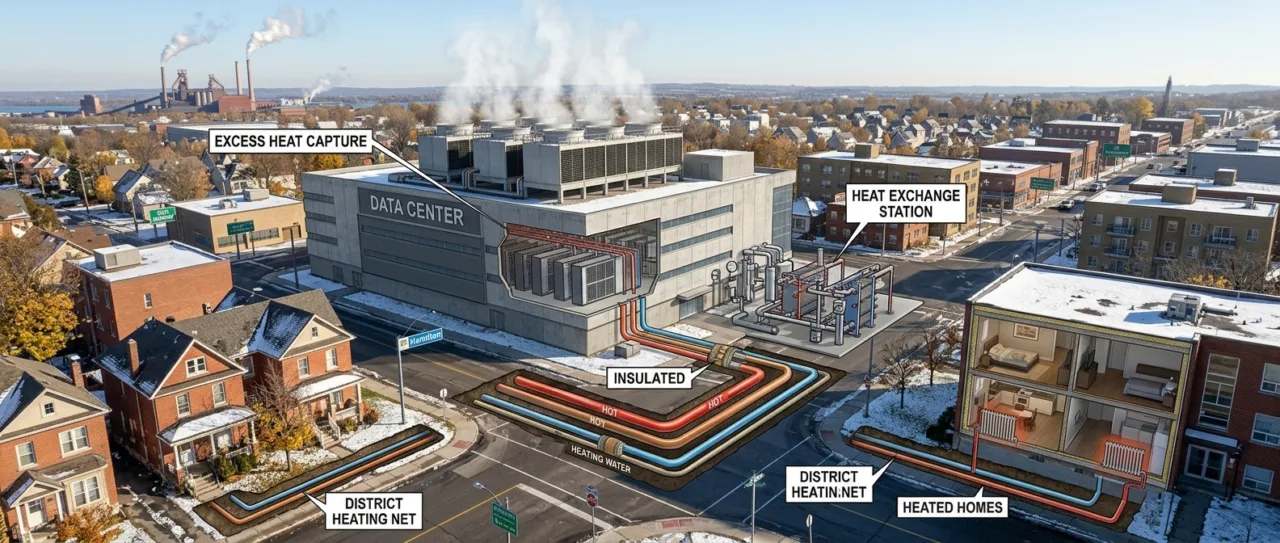
With a new mayor, major industrial redevelopment projects and growing demand for AI infrastructure, Hamilton has an opportunity to rethink how technology and environmental sustainability can work together.
Artificial intelligence is creating an enormous new demand for electricity. The massive data centres needed to power AI consume significant amounts of energy, require sophisticated cooling systems and place additional pressure on electrical grids. Not surprisingly, environmental concerns are growing as governments and communities consider where these facilities should be built.
But what if we’re looking at the issue the wrong way? Instead of asking only how much energy AI data centres will consume, perhaps we should also ask how we can put that energy to better use.
For Hamilton, this question is particularly timely.With Keanin Loomis elected as the city’s incoming mayor, Hamilton is entering a new chapter. His campaign emphasized economic development, better infrastructure and getting measurable results for residents. Could environmentally responsible AI infrastructure become part of that conversation?
Hamilton Has an Advantage: We Already Know How to Reuse Energy
Hamilton has a long industrial history, and with it comes an enormous amount of waste heat. Our steel mills and other industrial facilities generate heat that often escapes into the environment. But that heat represents an opportunity.
Research supported by the Hamilton Chamber of Commerce found that recoverable waste heat from participating Bayfront industries could potentially heat approximately 45,000 homes annually, reducing carbon emissions by an estimated 200,000 tonnes per year.
Hamilton also has an existing district energy system operated by Hamilton Community Enterprises (HCE). Since 2002, it has supplied heating and cooling to buildings in the downtown core.
In 2025, HCE released an Energy Harvesting Study examining the feasibility of connecting industrial waste heat sources along Hamilton’s Bayfront to buildings downtown through a thermal corridor. In other words, Hamilton is already investigating ways to turn wasted industrial energy into something useful. AI data centres could become part of that solution.
AI Data Centres Produce Something We Can Use: Heat
Almost all the electricity used by a data centre’s computing equipment eventually becomes heat. Today, much of that heat is simply released into the environment through cooling systems.
But what if we captured it instead? Imagine an AI data centre in Hamilton’s industrial area that supplies recovered heat to nearby businesses, residential developments or public buildings. That heat could potentially be used to:
- Warm offices, apartment buildings and institutional facilities.
- Supply greenhouses and indoor growing operations.
- Reduce natural gas consumption in industrial and commercial buildings.
- Support an expanded district heating network serving parts of Hamilton.
This isn’t science fiction. Data-centre waste heat recovery is already being used and explored in other parts of the world.
There are practical challenges, of course. Data-centre heat is often relatively low-temperature, so heat pumps may be needed to make it useful. And heat must be transported to customers who actually need it. But Hamilton’s existing energy infrastructure and concentration of industrial and commercial buildings make it a particularly interesting place to explore the possibilities.
Steelport Could Be an Interesting Test Case
One development worth watching is Steelport, the proposed redevelopment of the former Stelco lands on Hamilton’s waterfront. The project envisions transforming a large industrial property into a modern employment and industrial centre, potentially including data centres.
According to the developer, the site has existing electrical and cooling infrastructure, and opportunities are being explored with Hamilton Community Enterprises to capture waste heat from future facilities. The possibility of connecting that heat to a broader district energy system is particularly interesting.
However, the proposal has also generated substantial opposition from residents and environmental advocates concerned about electricity demand, water use and the potential impact on surrounding communities. In June 2026, a City committee rejected a land severance application associated with the proposed data-centre development.
These concerns deserve serious consideration. Rather than treating Steelport as an inevitable development, Hamilton has an opportunity to examine whether a data centre could deliver demonstrable environmental and economic benefits.
Could waste heat actually be recovered and used? Would the facility require additional electricity generation? Could cooling systems avoid drawing on municipal drinking water supplies? What would the community gain? These are questions worth answering before any claims of environmental benefit are accepted.
Could Data Centres Also Help Ontario’s Electricity Grid?
Another opportunity involves how AI data centres use electricity. Some AI computing tasks, particularly training large models, can be scheduled to run when electricity demand is lower. That creates the possibility of data centres becoming more flexible electricity customers.
For example, a facility might increase certain computing activities during periods of abundant low-carbon electricity and reduce them during peak demand. Combined with energy storage, this flexibility could help Ontario make better use of its electricity generation.
But there’s an important condition: data centres would need to make genuine commitments to flexible electricity consumption. Simply adding a large, continuous electrical load would not produce the same benefit. And because Ontario’s electricity demand is already expected to grow substantially, new data centres must be accompanied by adequate electricity supply and infrastructure.
AI Could Help Hamilton Reduce Energy Consumption Elsewhere
There’s another side to the equation that shouldn’t be overlooked. The AI systems operating inside these data centres could help other Hamilton businesses use less energy. Consider some practical applications:
Manufacturing: AI could optimize production schedules, equipment operation and maintenance, reducing wasted energy and materials.
Commercial buildings: Intelligent building management systems could adjust heating, cooling and ventilation based on actual occupancy and weather conditions.
Transportation: AI-powered route planning could reduce unnecessary travel, fuel consumption and delivery costs.
Electricity management: Better demand forecasting could help utilities and large energy users manage electricity consumption more efficiently.
Hamilton has a substantial industrial base, along with hospitals, educational institutions, logistics businesses and commercial facilities. Many could benefit from these applications. The challenge is measuring the results. AI only becomes an environmental solution when the energy and emissions it saves exceed those required to deliver it.
An Opportunity for Hamilton’s New Mayor
Keanin Loomis comes to the mayor’s office with a background in business leadership, including his former role as President and CEO of the Hamilton Chamber of Commerce. Throughout his campaign, Loomis emphasized the need to strengthen Hamilton’s economy, improve infrastructure and deliver measurable value for taxpayers. AI infrastructure presents an interesting test of how those priorities might be applied.
Hamilton has the potential to attract investment in emerging technologies, but economic development shouldn’t be measured by investment dollars alone. The question is whether new developments can provide lasting benefits to the city. Could a data centre help finance new district energy infrastructure? Could recovered heat reduce heating costs for local businesses? Could investments in electricity infrastructure benefit other employers? Could Hamilton develop new expertise and employment opportunities in energy-efficient computing?
And importantly, could these benefits be achieved without placing unacceptable pressure on the city’s electricity, water and environmental resources? Loomis’s incoming administration will have an opportunity to help shape the answers, working alongside City Council, utilities, developers, environmental organizations and residents.
Hamilton already has a Community Energy and Emissions Plan targeting net-zero greenhouse gas emissions by 2050. New technology investments could be evaluated against those existing commitments. Rather than choosing between economic development and environmental responsibility, the city could ask developers to demonstrate how their projects contribute to both.
What Should Hamilton Expect From New Data Centres?
If AI data centres are going to become part of Hamilton’s local economy, perhaps we should consider what they could contribute to our community. Rather than viewing them solely as technology investments, we could encourage developers to:
- Recover and reuse waste heat wherever practical, particularly when facilities are close to existing or proposed district energy infrastructure.
- Invest in additional low-carbon electricity rather than simply adding demand to the existing grid.
- Use efficient cooling systems that minimize electricity and water consumption.
- Participate in electricity demand management to reduce pressure on the grid during peak periods.
- Demonstrate measurable environmental benefits through transparent reporting on energy consumption, emissions and recovered heat.
These expectations could help distinguish developments that genuinely contribute to Hamilton’s environmental goals from those that simply promise to operate efficiently.
An Opportunity for Hamilton to Lead
Hamilton has reinvented itself many times. Our industrial history, once seen primarily as an environmental challenge, could also become an advantage in developing more sustainable energy systems. We already have industrial expertise, existing infrastructure, research institutions and a growing interest in recovering wasted energy.
AI data centres won’t automatically make Hamilton greener. Without careful planning, they could increase electricity demand and greenhouse gas emissions. But if we integrate them with district heating, clean electricity generation and smarter energy management, they could become more than just another large consumer of power. With a new mayor and council preparing to set priorities for the coming years, now is a good time to have that conversation.
Perhaps the question isn’t simply whether Hamilton should welcome AI data centres. It’s what we should expect them to contribute to our community in return. That’s a conversation worth having, regardless of where we stand on any particular development.
Leave a Comment